Play
How Risky Play Builds Children's Competence and Health
The UK Health and Safety Executive (HSE) argues that the goal of play provision should not be to eliminate risk, but to weigh up the risks and benefits and focus on real risks, not paperwork. This balanced approach contrasts with the everyday instinct to make playgrounds "as safe as possible." It also introduces the key distinction between riskand hazard, and the idea that some risk is not only acceptable but beneficial[2].
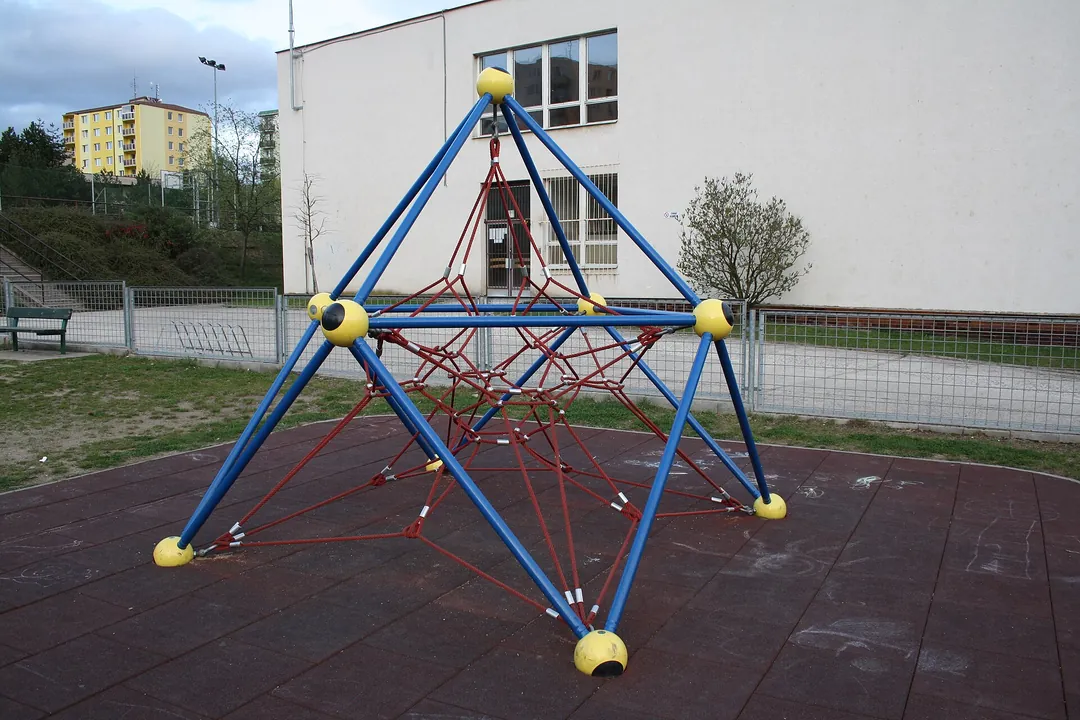
When Safety Goes Too Far: Risk vs Hazard in Children’s Play
Safety bodies are increasingly advocating against the elimination of all risk in children's play, instead viewing some risk as essential to healthy development. The HSE defines riskas the chance that somebody could be harmed by a hazard, together with an indication of how serious the harm could be, while a hazardis the thing with the potential to cause harm. This framing has been adopted in analyses of play equipment safety standards building on the HSE's 2006 guidance[7].
Play Wales, a UK national play charity, underscores this distinction, asserting that a "well-established body of evidence" shows that risk taking in play brings benefits including extending skills, developing physical and emotional capacity, and experiencing the consequences of actions. It explicitly states that "risk and challenge are desirable, but inappropriate hazards are not."[14]
In guidance for practitioners, Wandsworth Early Years and Childcare Service in London defines a hazardas "something a child does not see and which is usually dangerous", and a riskas a "visible challenge that a child can see and chooses whether or not to engage in". The service states that "if we eliminate risk it can lead to our children's inability to assess danger."
According to the HSE's statement on promoting a balanced approach to children's play and leisure, providers "should focus on controlling the real risks, while securing or increasing the benefits – not on the paperwork." This reflects a growing consensus that when planning and providing play opportunities, the aim should be to weigh up the risks and benefits, rather than eliminating risk entirely[2].
What Counts as Risky Play? Heights, Speed and Rough-and-Tumble
Risky play can be defined as activities that challenge children and take them out of their comfort zones, while still being within their capabilities. Ellen Beate Hansen Sandseter's influential 2007 work categorises children's risk-taking in play into six types:
- Play with great heights
- Play with high speed
- Play with dangerous tools
- Play near dangerous elements
- Rough-and-tumble play
- Play where children go exploring alone
These categories centre around children seeking out thrilling experiences that expose them to previously feared stimuli, while improving their ability to cope with those stimuli.
Sandseter's work has been extensively cited, including by the 2021 study "Fraught with frights or full of fun", which reports the perspective that children aged 6–8 see risky play as "providing opportunities to challenge and test limits, to explore boundaries and to learn about risk."
In practice, practitioners observe that children actively choose and push their own boundaries in risky play. The Wandsworth guidance notes that when children engage in activities like climbing trees or playing with a sharp stick, "lots of learning is taking place about actions & consequences and cause and effect."
The Benefits: Competence, Health and Fear-Reduction
Children stand to gain significant development benefits from exposure to risk—both in terms of acquired skills and reduced anxiety. Ellen Beate Hansen Sandseter's empirical findings conclude that when children engage in activities like climbing and running, they are practicing motor skills, muscle strength, endurance and skeletal quality. These skills are further honed as age-appropriate fears are reduced.
Other research corroborates these findings. A 2015 systematic review assessed the impacts of risky outdoor play and found that it "has beneficial impacts across the domains of physical health, social health, and influence on behaviours."
Practitioner guidance makes similar assertions. The Wandsworth Early Years and Childcare Service states that if children are allowed to take risks, "they learn how to manage those risks." Lincolnshire County Council's guidance specifies that through risk in play, children "explore their limitations and develop resilience," with specific skills including cooperation, curiosity, confidence, decision-making and resilience.
Designing Play Spaces: Safe from Hazards, Rich in Challenges
With a firm grasp of the developmental and health benefits of risk in play, the focus turns to identifying what role adults have in shaping children's play environments.
Currently, playgrounds are designed to be as safe as possible, with safety features and protective surfacing portending a "no risk" approach. However, an increasing number of researchers are advocating that we stop viewing playgrounds as training grounds for caution, and instead incorporate elements that facilitate a healthy approach to risk.
"Risk and safety in outdoor play", a 2025 synthesis by Bundy and colleagues, reports that "through risk-taking in play, children show increased physical activity, improved motor and spatial skills, and learn risk assessment and risk mastery."
Citing Sandseter, Wandsworth Early Years and Childcare Service notes that when adults diligently work to remove hazards, children can focus on learning to manage visible, known risks, and explore their own boundaries.
The implicit understanding is that with adult guidance and a supportive environment, children can safely navigate the edge of their comfort zones, and that the benefits of doing so are worth both the moderate risk of injury, and the increased complexity of managing risk.
Taking Responsible Risk: How Parents and Schools Can Manage Playground Safety
Parents can view as responsible any level of risk in play that: 1. has obvious benefits 2. isn't excessive in likelihood or severity 3. is visible to children, and 4. allows them to explore their boundaries under adult supervision
Children do not intrinsically know what is safe, and will go as far as they are able if given the opportunity. Parents, therefore, have two primary responsibilities: Firstly, to identify and remove or block off hidden hazards. Secondly, to expose children to challenging but manageable risks, and guide them to make informed judgments around those risks.
This approach requires a shift in mindset—steadfastly blocking risks, for fear of litigation, is no longer considered best practice. Moreover, it requires parents to reassess their comfort with tolerable consequences. For some, this may mean accepting the odds of minor injury, like a bruised knee from a tumble down a hill—the same hill that taught their child to run confidently.
Children's play drives a critical developmental process, and adults' ability to safely incorporate risk into their play environment enables them to maximise the benefits. There are pocket-sized tools, like the Play Safety Forum's Risk–Benefit Assessment Form, that can help parents and organisations frame these decisions[13].
Why Overprotecting Undermines Children's Rights and Capabilities
Finally, it is worth recognising that if parents block every risk, the playground becomes a tamer place, and with that, the child becomes a caved-in version of their otherwise adventurous, curious self. Sandseter, summarising her work, reports that risky play has various long-term benefits for children, including resilience, social skills, physical activity, and well-being.
The HSE's advice, and guidance from Play Wales, underpin the argument that not only do benefits to children's health and development outweigh risks, but that removing risk entirely does a disservice to children's right to meaningful play. As the Play Safety Forum argues, a very low risk of serious injury may be unavoidable if the benefits are obvious, and further risk reduction would remove those benefits.
In lowering the bar, we neglect to consider that from an evolutionary perspective, being comfortable with risk is an armour for children growing up in today's world. For that, they need the freedom to climb higher, run faster, and rough-and-tumble more often, at higher stakes, than we adults are comfortable with.