Arts
Why Arts Education Survives Every Budget Cut Argument
The Houston arts education study shows that expanding arts programs leads to increased empathy, school engagement, student discipline, and writing achievement. Significantly, it does not harm standardized maths, reading, or science scores.
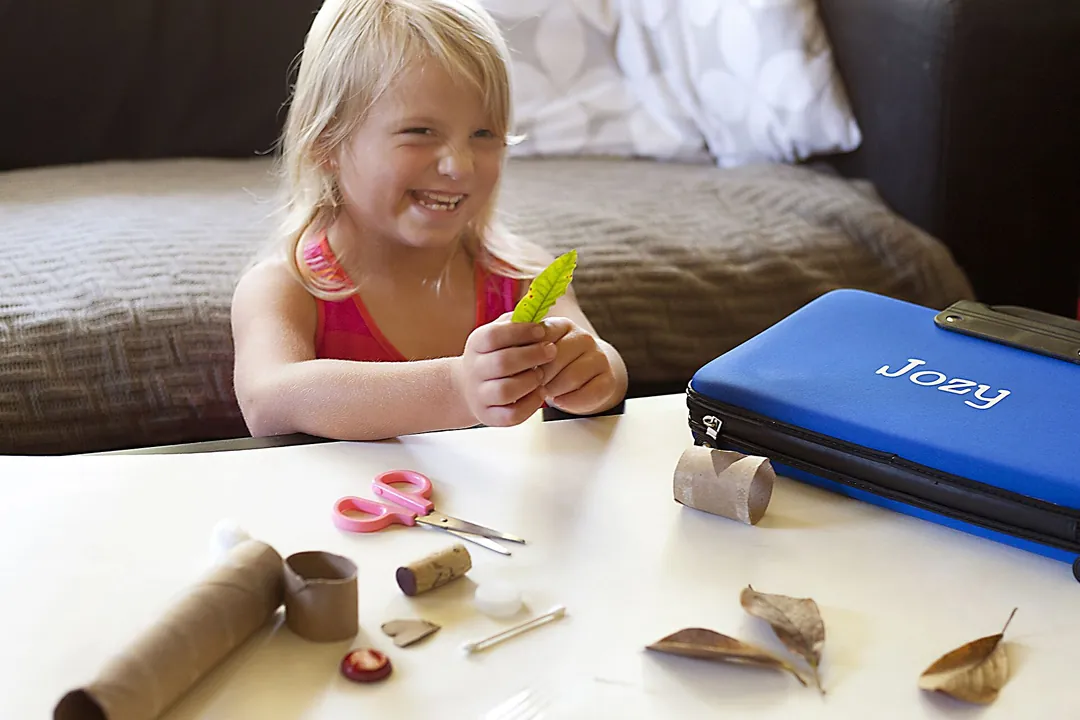
Arts that change school, not test scores
Arts education matters, but not by magically raising test scores. The 2022 study in Learning, Culture and Social Interaction finds no evidence for a causal link between arts participation and standardized test scores. Similarly, a 2025 systematic review on out-of-school visual arts finds that while arts education enhances cognition, it does not translate to higher grades. A CEM report commissioned at Durham University states that arts education has no convincing evidence of a causal impact on young people’s academic outcomes, though some studies report positive effects on learning skills and creativity.
The Houston study, a large quasi-experimental evaluation of arts education expansion in public schools, provides strong evidence. It finds positive effects on empathy, school engagement, student discipline and writing scores, while reading, math and science performance remain unchanged. This suggests that expanding arts education improves social-emotional skills and writing without hurting core academic results.
What arts classes actually train: attention and executive function
So, how exactly does arts education shape learning and engagement? The 2025 systematic review uses meta-analysis to find that visual arts participation boosts working memory and attention span in children. This aligns with a 2015 study in Creative Education that reports art education improves self-control, self-expression, creative thinking, practical reasoning, attention skills and attention management in preschoolers. The key mechanisms are selective attention and executive function – the mental processes that let you pay attention, remember instructions and switch between tasks.
These findings can be explained neurologically. A 2025 research brief from the California Arts Council, summarizing neuroscience research, states that children engaged in an art form that sustains their interest can strengthen the brain’s attention networks and apply this to other cognitive tasks. These effects are seen in music training, which correlates with neural improvements in geometric representation, reading acquisition and sequence learning.
In one coordinated three-year study reported by Americans for the Arts, children in music and arts education programs were more likely to develop stronger attention skills and memory strategies for academic subjects. Music training was correlated with these gains rather than non-artistic programs. The authors found that sustained arts practice led to trained attention, a key mechanism in the study’s models.
Habits of mind: revision, perception and expression
Arts education also cultivates habits of mind that go beyond any source of cognitive improvement. While standardized tests cannot root out an arts education benefit, its advantages present themselves in the revising, redrafting, and willingness to accept critique that all artists must engage with. That’s according to Professor Elliot Eisner, whose work underpins arguments for the intrinsic and functional value of visual arts education. Eisner contends that the arts provide material that no other form of education, however authentic, can duplicate – highlighting skills like self-expression, perception, cognition and aesthetic understanding.
These notions correlate with the intrinsic value framework that Eden Zitlali Acosta’s dissertation in combined creative arts curricula education examines. According to Acosta’s work, the arts are worth learning for their own sake, and this value emerges in unique learning outcomes, rather than collateral improvement in other academic domains. At the give-it-to-me-straight policy level, the UK government-commissioned Arts, Creativity and Cultural Education report reveals that in a review of 19 international education systems, arts subjects are compulsory in all 19, indicating a clear and widespread recognition of the arts as core to the curriculum, rather than enrichment extras.
Arts as core curriculum, not enrichment
This not only demonstrates demand for arts education at the highest policy level, but shifts its position from optional “enrichment” to compulsory subject, on par with maths and language, and more akin to fundamental skills like literacy and numeracy. That’s the international norm, with arts subjects in all parts of the curriculum in as many as 19 national systems surveyed in 1999-2000. The arts’ key role in developing creativity and cultural understanding seemed irrefutable to the UK’s Department for Education, which commissioned the report.
Arts education has intrinsic value, and that grounds its place in the core curriculum. Reflecting on the beginnings of her approach, she established that the visual arts provide unique educational benefits and knowledge that can’t be accessed any other way. Not instrumental only, but intrinsic, and needed to round out a child’s education. She argues that the evidence that arts education improves skills that are measurable in the STEM curriculum is actually weak or non-existent once analysed critically, and goes so far as to call the superficial correlation between arts and achievement and even employment an ‘illusion.’
How to argue for arts without overclaiming
The OECD/Centre for Educational Research argues that arts education should be justified by its intrinsic value and “habits of mind” it cultivates, rather than supposed transfer to other subjects. The Houston study provides a clear argument for arts: it demonstrates how expanding arts education does no harm to test scores, while strengthening empathy, engagement and writing. Fold that into the facts that arts skills are worth learning in their own right, that they promote unique learning capabilities, and that the overwhelming international policy norm treats arts as core, not enrichment, alongside the data on how arts disciplines improve selective attention, working memory and executive function.
The Houston study on arts education expansion in schools should become a keystone in arts classrooms teachers keep on hand when facing opposition. As well as the generalised belief that arts improve social skills and can be tied to employability, teachers can be confident in the evidence around improvements in empathy and behaviour, including writing. Fine art such as visual and performing arts can be separated out from this, however. While the Houston study was not exclusively about these art forms, the findings around geometric representation, reading acquisition and sequence learning are correlated with musical training, so are worth briefly drawing teachers’ attention to. Plastic arts like painting and sculpture are not necessarily in the same category.
At the same time, arts educators should avoid claims that arts education boosts maths and reading scores, or that its primary value is instrumental. The OECD review, meta-analyses and quasi-experimental studies all suggest that the evidence for these claims is at best weak and contingent. Arts education can be defended honestly as its own discipline that trains attention, self‑control and habits of mind, while respecting its policy status as a core curriculum subject – not as a shortcut to higher test scores or better employment. That defensible position echoes the OECD’s finding that arts education is justified by its own intrinsic value, habits of mind, and cognitive benefits, not any supposed transfer to better scores or employability.